
Hello Readers!

Welcome to the March 1 Insecure Writer’s Support Group monthly post. The IWSG is a great resource and support group for established and new writers where we can share our doubts and journeys and learn and share more about the writing craft. If you wish to join this wonderful group, please visit the website here.
A big shoutout to our Ninja Captain Alex for all the hard work in bringing this group together. The co-hosts for this month are Diedre Knight, Tonya Drecker, Bish Denham, Olga Godim, and JQ Rose! Thank you all for co-hosting.
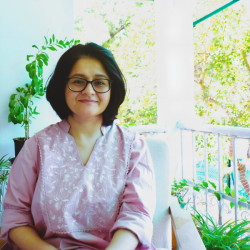
Today I have with me a special guest and an immensely talented writer who will also share her thoughts on this month’s question. I am happy to welcome Indian fiction writer and poet, Mandira Pattnaik.

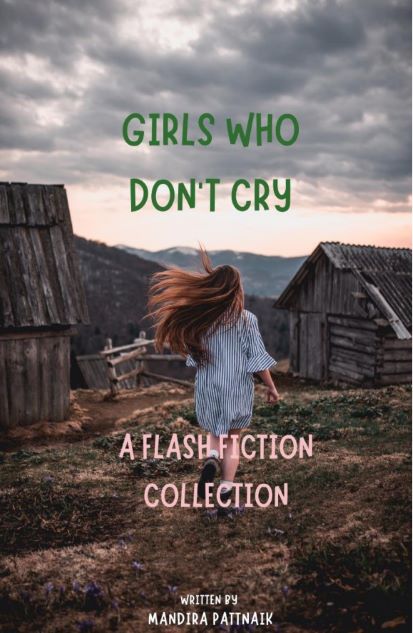
Mandira’s flash fiction collection Girls Who Don’t Cry has been recently published by Alien Buddha Press.
Before we ask her more about the collection and some writing advice, here is a small Bio of the author.
Mandira has been published in print and online in over 200 journals/magazines such as Citron Review, Bending Genres, Penn Review, Amsterdam Quarterly and others. Her work has received Wigleaf Top 50 Longlisting (2022), multiple Pushcart Prize, Best of the Net and Best Microfiction nominations. Her fiction has been translated and highly commended by editors including a placing in the Litro Magazine Summer Flash Contest 2021 and Honorable Mention in CRAFT Flash Contest 2021. She is the Contributing Editor of Vestal Review, writes columns for Reckon Review and is the Editor and Columnist, trampset. To read more about Mandira Pattnaik follow her website, https://mandirapattnaik.com/
And now, it’s over to Mandira!
1. When did the writing bug bite you? Please tell us how it started and what has your journey been like?
Sounds clichéd, but truth is that I’ve wanted to be a writer for as long as I can remember. I had a keen interest in the English language and loved creative writing classes in school. Always ended up giving a spin to the essays we were told to write. For example, I remember the topic in one class was “Summer Vacations”. As is expected of High School students, essays were about travels with family, Nana-Nani’s house, a hobby taken up, and so on, but I thought why not about something no one will write about. I had, at that time, just read about scuba-diving in Reader’s Digest. Mesmerised with the beautiful underwater photos, and partly feeling the thrill of it as though I had experienced it first-hand, I wrote my essay. The teacher loved it so much that she made me read the essay in front of visibly awed fellow students!
Some of my pieces of that time got published—including a piece in the Times of India! Over the years, however, career and work took precedence, as is often the case with most of us. Now that I’m writing again, it’s been a most fulfilling journey. From the mundane to the economic, political, speculative, intriguing, escapist—I compulsively weave stories around anything that interests me!
2. You are published widely and regularly in literary magazines. What writing advice do you have for writers who continuously face a string of rejections?
Thank you so much, Sonia. So grateful editors have found my work satisfactory. Rejections are part of the process, and I used to get a lot, and still do. The only reason I get fewer declines now is because I submit a lot less these days! That brings us to what I’d like to say to anybody who hopes to be published by international literary magazines: SUBMIT A LOT. From the editor’s side of things (now that I read for two magazines!), I can vouch for the fact that the scales are heavily tilted against writers. For instance, if a magazine says 4 per cent acceptance rate, can you imagine what that means? It means for every 100 stories only four will move up to publication. What of the other 96? 96 writers will be rejected. Those writers might just feel their effort is worthless, that they are no good. Might quit trying. NO! It’s just a numbers game. Keep submitting, and don’t wait for the outcomes. Simultaneously, keep tweaking pieces under submission and then submit again. Also, keep writing new. Challenge yourself to something you’ve not done before. Finally, READ a lot! Again, it massively helps to read archives of magazines, and submit something you’re hopeful they’ll like, rather than blindly throwing something in the queue.
3. ‘Girls Who Don’t Cry’ has several narratives of women – mothers, daughters, wives – placed in different settings yet bound together by a common thread. How did women form the core of these stories written for different platforms over a period of time? Was it a deliberate attempt? Did you plan a collection much before you actually decided on one?
(Click on image for purchase link)
Though I think I now know better, and am currently writing for a collection, composed largely of new and unpublished flash fiction, to be honest, I am just grateful I found a common thread in a bunch of my earlier stories to put them together and submit as a collection! I wish someone told me that it’d save me a lot of time and effort to ‘plan’ a collection and write accordingly, say, two years ago!
Women naturally are central characters in a great number of my stories but I’ve also enjoyed using other POVs — children, men, birds (my Gone Lawn story), crabs, collective voices, and so on — wherever possible in my writing from the past year or so.
4. As is evident in ‘Girls Who Don’t Cry’, your writing is richly metaphorical and you draw a parallel world to present a simple, everyday social problem/setting. For example, in the first story ‘Signedora’ the issue of a woman taken for granted, placed on a pedestal with the expectation of living with her eyes shut, meets a very different treatment. How do you come up with these deeply individualistic ideas?
Haha! I’m SO flattered. Thank you so much for diving deep into the collection and being so kind. Frankly, I have no idea what follows what. For example, for “Unravelling a Rainbow”, the 26/11 Mumbai incident was a springboard, but it was also slightly drawn from “Pretty Woman” but Richard Gere is not loving or kind here, rather spineless and cunning. For “The Crying Laundry”, one evening the YouTube video of Beiber’s Baby, Baby popped up in my feed, and I was thinking of a girl who was younger when the album released, like what would she be doing now? That sparked the story. “Lyrics of a Thunderstorm” follows from a devastating news item I read about a martyr, brought home in a coffin.
And now that you say it, frame it so nicely, call it “deeply individualistic ideas”, I will keep returning to this interview to feel better when I am low after a big rejection!
5. Tell us something about the technique of using characters as creatures. What draws you to attempt something of this kind?
Just the thrill of trying something new. I think it keeps the process of writing (for that matter, any creative activity) from becoming boring and regular if one keeps experimenting. By playing with characters (like using them as creatures/inanimate objects/metaphorical beings), forms, settings, and genres, the narrative becomes something I had not set out to do initially, and thus, is fun. Love to attempt something I haven’t done previously.
6. Tell us something about your poetry chapbook ‘Anatomy of a Storm-Weathered Quaint Townspeople’.

(click on image for purchase link)
Published by Fahmidan Publishing Kuwait/UK, ‘Anatomy of a Storm-Weathered Quaint Townspeople’ is a digital collection of poetry that evolved from experiences of how lives are dependent on weather, resources and on each other in small-towns, and how this interdependence shapes the present and futures of people. Living a large part of my life in small town India, these poems have been written over the years to respond to the changing dynamics of my country.
7. What is the next project you are looking forward to?
(click on image for purchase link)
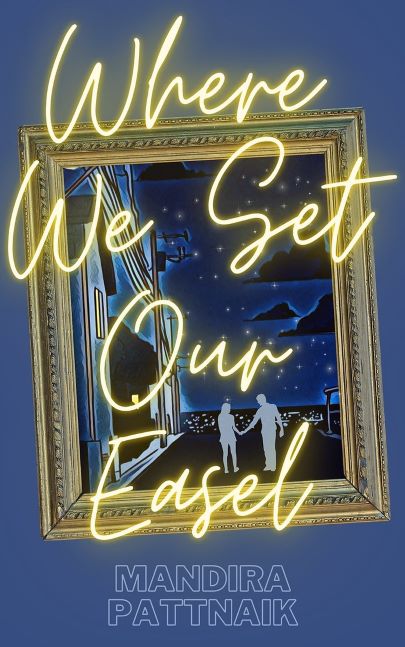
I am super excited about my upcoming novella from New York-based Stanchion Publishing, “Where We Set Our Easel” in May 2023. In this chapbook of micro prose, we follow the journey of a boy and girl who meet at a café (inspired by the Vincent van Gogh painting Café Terrace at Night), through military school/nursing college, marriage, kids, empty nest, battlefield accident, and love lost and regained. I have liberally used real, existing places to anchor the stories, and used values and sensibilities to which most of us can relate.
(This is interesting because I clearly remember a prompt for one of the WEP challenge which was Café Terrace at Night!)
8. Finally, I’d love for you to answer the IWSG question for this month. Have you ever read a line in a novel or a clever plot twist that caused you to have author envy?
I was asked this question in a recent interview, but I don’t know if a writer can really ever feel envious about another’s writing. I have never experienced this. When I read, I am so involved in it, I am like the spectator in a magic show, just waiting to applaud and never really caring how the magic was done!
(This is beautiful. I wouldn’t say I’ve been envious, but definitely inspired by many lines and plot twists!)
Thank you, Mandira, for being on A Hundred Quills today. I am sure the IWSG members have quite a few takeaways from this interview.
For the benefit of those who are looking to work on their flash fiction, Mandira has an upcoming flash fiction workshop in March, information about which may be found by clicking on the following image.

Thank you, dear readers, for your time. Until next month, happy writing!
Discover more from A Hundred Quills
Subscribe to get the latest posts sent to your email.


Great interview. Congrats on all the success!
LikeLiked by 1 person
Thank you!
LikeLiked by 1 person
Congratulations on your success. And the advice to keep submitting. I had many “light bulb moments” when reading your blog post. Thank you for spurring me on and growing my writing career.
LikeLiked by 1 person
So glad, Rose! Thank you for stopping by.
LikeLike
Hi Sonia! I found a link on Pat Garcia’s blog which linked to your blog. Usually the ones on my blog don’t link.
Thanks for this great interview. Love the cover of Where we set our Easel. Eye catching.
LikeLiked by 1 person
Thank you, Denise!
LikeLike
A flash fiction collection sounds fascinating! Thanks for hosting Mandira here today. I enjoyed reading about her and her writing.
LikeLiked by 1 person
Hi Lee. Thank you for being here. I’ve been trying to comment on your blog posts but it isn’t working somehow.
LikeLike
Hi Sonia, enjoyed reading Mandira’s interview. Like her book’s title.Girls Who Don’t Cry, has an intriguing sound to it.
LikeLiked by 1 person
Thank you for visiting, Rachna.
LikeLike
Hi,
I so agree. You have to submit a lot to get your foot in the door and you never know when it will happen. I must check out her website.
Thanks for the interview.
Shalom shalom
LikeLiked by 1 person
Thank you, Pat. Glad to have you here.
LikeLiked by 1 person
Congratulations, Mandira! It’s neat that you experiment with characters/creatures like that, and it was fun to read all of your insights.
LikeLiked by 1 person
Thank you for stopping by.
LikeLike
Congrats on your book, Mandira. I’m inspired by how you were able to get published as much as you have while working. I’m glad you’re having more time to write now.
LikeLiked by 1 person
Thanks Natalie!
LikeLike
A fascinating interview. Mandira. Thank you for being so open.
LikeLiked by 1 person
I’m glad you enjoyed reading, Olga!
LikeLike
Lucky you’ve never had envy!
That is mind-boggling when you think how many manuscripts are rejected. And many are really good.
LikeLiked by 1 person
I agree, Alex. Many of those in the slush pile are worthy of much more.
LikeLike
I greatly enjoyed reading this engaging interview!
LikeLiked by 1 person
I am glad, Liz. Thank you!
LikeLiked by 1 person
You’re welcome, Sonia!
LikeLike